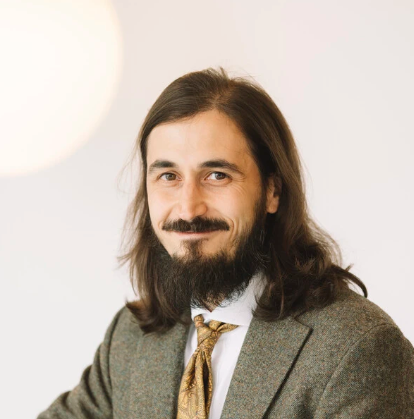
Dr. Artem Babaian is exploring life at its smallest — and most consequential — scale. By combining computational biology with the study of genes and viruses, his research analyses hundreds of millions of gigabytes of DNA and RNA sequence data to uncover biological signals that would be impossible to detect using traditional methods.
An Assistant Professor in the Department of Molecular Genetics at the University of Toronto, his interest traces back to childhood, he says. At age 11, after reading The Hot Zone by Richard Preston, Babaian became fascinated by microbes and how something so small could have such a large impact on something like human health. That early curiosity now drives a central question in his research: could previously unknown viruses play a role in diseases with unclear origins, like Alzheimer’s disease? And if so, can these viruses be identified?
Babaian’s work is expanding scientific understanding of viruses and their hidden biological connections to disease. What he discovers could change our understanding of human health and support earlier detection, improved diagnostics and open new paths for prevention and treatment options.
Still in the thick of its discovery period, Dr. Artem Babaian’s research continues to push the limits of how data-driven science can deepen our understanding of human health.