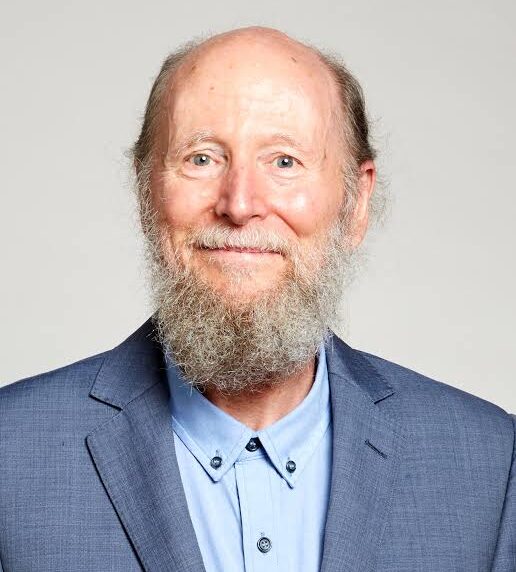
Humans and animals learn by doing, observing results, adjusting accordingly and trying again. Dr. Richard Sutton, a Professor in the Department of Computing Science at the University of Alberta, has spent his career translating that everyday process into a scientific framework that transformed artificial intelligence (AI).
His work explores reinforcement learning — a model of learning shaped by interaction, feedback and adaptation. Unlike supervised learning, where corrected answers are provided, reinforcement learning requires an agent to discover what works by trial-and-error. This result is a form of machine learning that more closely resembles how humans learn in real life.
Originally a theoretical framework, the influence of reinforcement learning is now widespread. It underpins landmark achievements, such as AlphaGo, and guides automated decision-making digital platforms, from personalized recommendations to online advertising and content selection.
Dr. Sutton’s interest in AI and learning began with a fascination about the nature of the mind. As a student, he was drawn to computers, often described as artificial brains, yet he quickly recognized a gap: computers followed instructions, but they did not learn like humans do. At the same time, the human brain could be understood as a machine. Reconciling that tension became the intellectual thread that guided his research.
Sutton views artificial intelligence as an international endeavour, yet he is clear about Canada’s role. “Canadian research has been very important in artificial intelligence,” he notes. “We’ve been punching above our weight.” Significant advances in deep learning emerged from Canada. The University of Alberta has become a global centre for academic reinforcement learning research. Strong AI research, he argues, should not be concentrated in only a few countries.
Even today, Dr. Sutton says the field is still evolving. As understanding deepens, he expects learning systems to transform how people work, think and spend their time — and to alter how humanity understands intelligence itself. Beyond building more capable machines, his work aims to illuminate learning as a fundamental process, offering insight not only into artificial systems, but into the human mind as well. His career illustrates how Canadian research has helped define the scientific foundations of modern AI.